

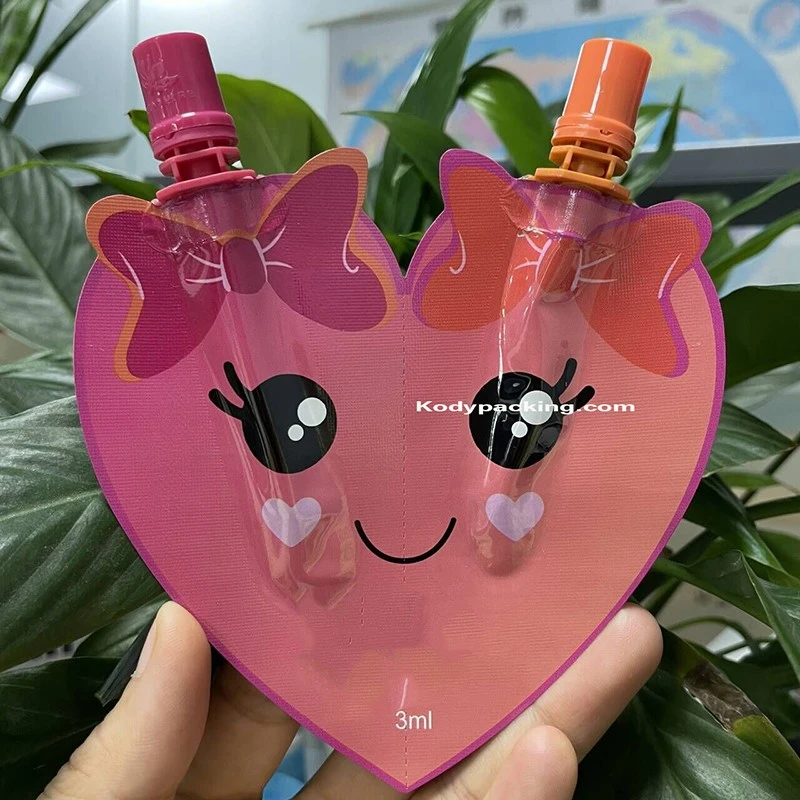
Hey there! As a supplier of cosmetic spout pouch sachets, I know how crucial it is to ensure the sealing integrity of these little guys. A well-sealed sachet not only keeps the cosmetic product fresh and protected but also enhances the overall user experience. In this blog, I'll share some practical ways to measure the sealing integrity of cosmetic spout pouch sachets.
Why is Sealing Integrity Important?
Before we dive into the measurement methods, let's quickly understand why sealing integrity matters. Cosmetic products are often sensitive to air, moisture, and contaminants. A poor seal can lead to product leakage, oxidation, and microbial growth, which can compromise the quality and safety of the cosmetic. Moreover, it can also damage the brand reputation if customers receive products that are leaking or have gone bad. So, ensuring a tight seal is a must.
Visual Inspection
The first and simplest way to check the sealing integrity is through visual inspection. This method is quick and can be done right on the production line. Here's what you need to look for:
- Seal Appearance: Check if the seal looks uniform and continuous. Any gaps, holes, or irregularities in the seal are a red flag. The seal should be smooth and free from any signs of tearing or peeling.
- Seal Width: Measure the width of the seal. A consistent seal width indicates a well-controlled sealing process. If the seal width varies significantly, it could mean that the sealing parameters are not stable.
- Product Leakage: Look for any signs of product leakage around the seal area. Even a small amount of leakage can indicate a problem with the sealing.
Visual inspection is a great starting point, but it has its limitations. It can only detect obvious defects, and it's not very accurate for detecting small leaks or weak seals.
Bubble Test
The bubble test is a simple and effective way to detect leaks in the sachet. Here's how it works:
- Prepare a Container: Fill a container with water. You can add a small amount of soap to the water to reduce surface tension and make it easier to see the bubbles.
- Submerge the Sachet: Carefully submerge the sachet in the water, making sure it is completely covered. Press gently on the sachet to release any air trapped inside.
- Look for Bubbles: Observe the sachet for any bubbles. If there are bubbles coming from the seal area, it means there is a leak. The size and frequency of the bubbles can give you an idea of the severity of the leak.
The bubble test is a quick and easy way to check for leaks, but it's not very sensitive. It may not be able to detect very small leaks.
Vacuum Decay Test
The vacuum decay test is a more advanced method for measuring sealing integrity. It works by creating a vacuum around the sachet and measuring the rate of air leakage. Here's how it's done:

- Place the Sachet in a Chamber: Put the sachet in a sealed chamber.
- Create a Vacuum: Use a vacuum pump to create a vacuum inside the chamber. The pressure inside the chamber will drop, and the sachet will expand slightly.
- Measure the Pressure Decay: Monitor the pressure inside the chamber over a period of time. If there is a leak in the sachet, air will enter the chamber, and the pressure will increase. The rate of pressure increase is proportional to the size of the leak.
The vacuum decay test is a very sensitive method and can detect very small leaks. It's also a non-destructive test, which means the sachet can still be used after the test.
Ultrasonic Testing
Ultrasonic testing is another non-destructive method for measuring sealing integrity. It works by sending high-frequency ultrasonic waves through the sachet and analyzing the reflections. Here's how it works:
- Send Ultrasonic Waves: Use an ultrasonic transducer to send ultrasonic waves through the sachet.
- Analyze the Reflections: The ultrasonic waves will be reflected by the different layers of the sachet, including the seal. By analyzing the reflections, you can detect any defects in the seal, such as gaps or weak areas.
Ultrasonic testing is a fast and accurate method, and it can detect both surface and internal defects in the seal. However, it requires specialized equipment and trained operators.
Dye Penetration Test
The dye penetration test is a destructive test that can be used to detect leaks in the sachet. Here's how it works:
- Prepare a Dye Solution: Mix a water-soluble dye with water to create a dye solution.
- Apply the Dye Solution: Apply the dye solution to the seal area of the sachet.
- Let it Sit: Let the dye solution sit on the seal for a few minutes to allow it to penetrate any leaks.
- Wipe off the Excess Dye: Wipe off the excess dye from the surface of the sachet.
- Inspect the Seal: If there is a leak in the seal, the dye will have penetrated the leak and will be visible on the inside of the sachet.
The dye penetration test is a simple and effective way to detect leaks, but it is a destructive test, which means the sachet cannot be used after the test.
Importance of Regular Testing
Now that we've covered the different methods for measuring sealing integrity, it's important to note that regular testing is essential. Sealing integrity can be affected by many factors, such as changes in the sealing equipment, the quality of the packaging material, and the environmental conditions. By conducting regular tests, you can detect any issues early on and take corrective action to ensure the quality of your products.
Our Products
We offer a wide range of Cosmetic Spout Pouch Sachet to meet the diverse needs of our customers. Our sachets are made from high-quality materials and are designed to provide excellent sealing integrity. We also offer Cosmetic Sachet Pouches with Brush and Cosmetic Spout Sachet with Applicator for added convenience.
If you're in the market for cosmetic spout pouch sachets, we'd love to hear from you. We can provide you with samples and discuss your specific requirements. Don't hesitate to reach out and start a conversation about your procurement needs. We're here to help you find the perfect packaging solution for your cosmetic products.
References
- Packaging Machinery Manufacturers Institute (PMMI). "Best Practices for Sealing Integrity in Flexible Packaging."
- ASTM International. "Standard Test Methods for Determining the Leakage Rate of Packaging Using Vacuum Decay Method."
- TAPPI (Technical Association of the Pulp and Paper Industry). "Testing Methods for Flexible Packaging Materials."


